Measure & Experience

Data doesn't have to come from a database. Sometimes the most important signals come from building a sensor, strapping it on, and walking through a neighborhood — letting the body become an instrument of urban research.

What does the city do to your lungs? To your heart rate? The data is in your body — you just have to listen.
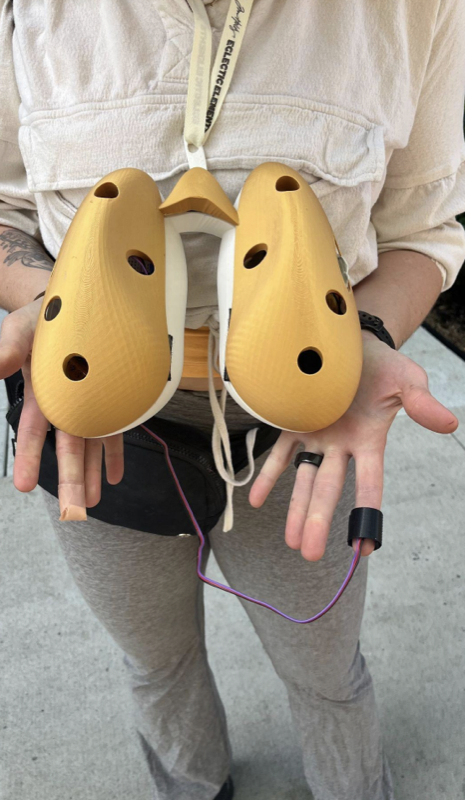
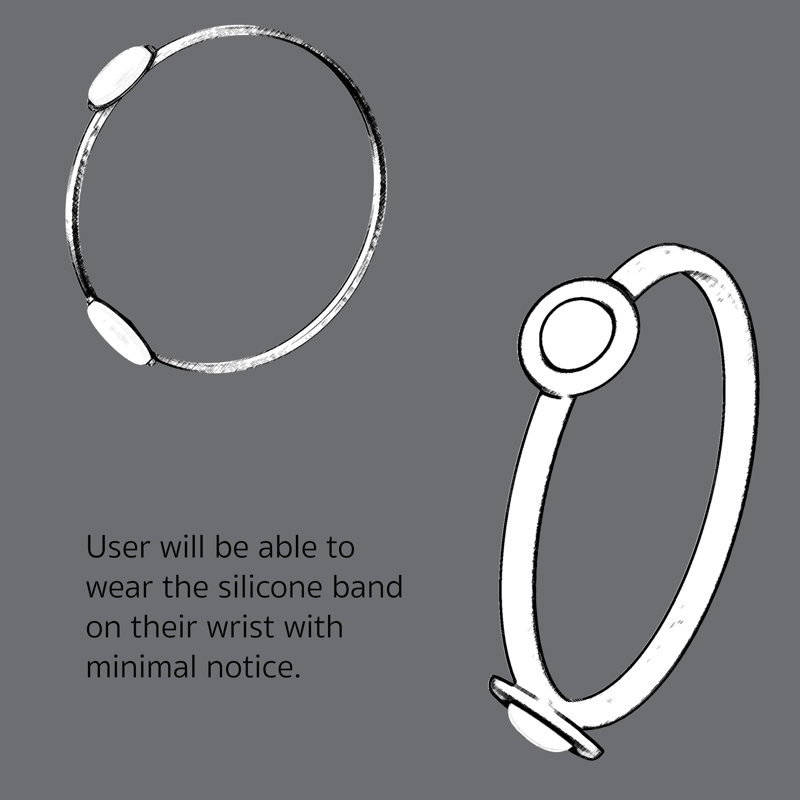
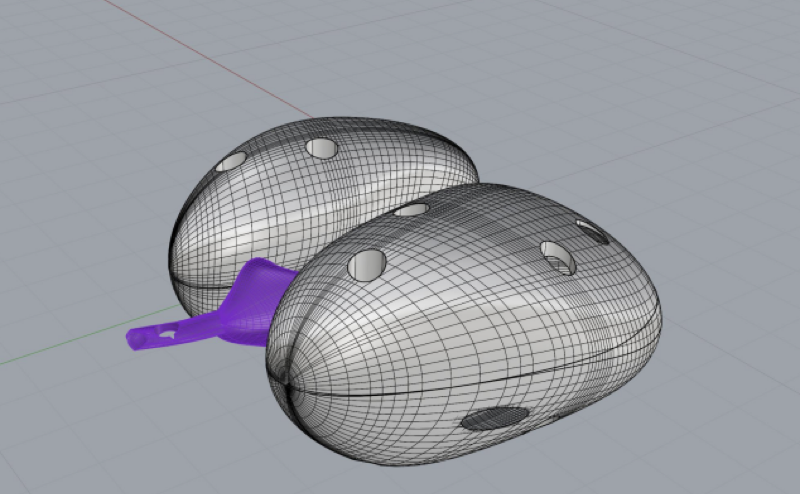
Wearable sensor wristband prototype design — silicone band with embedded sensor
Design & Fabrication · Spring 2025

Building the Sensor

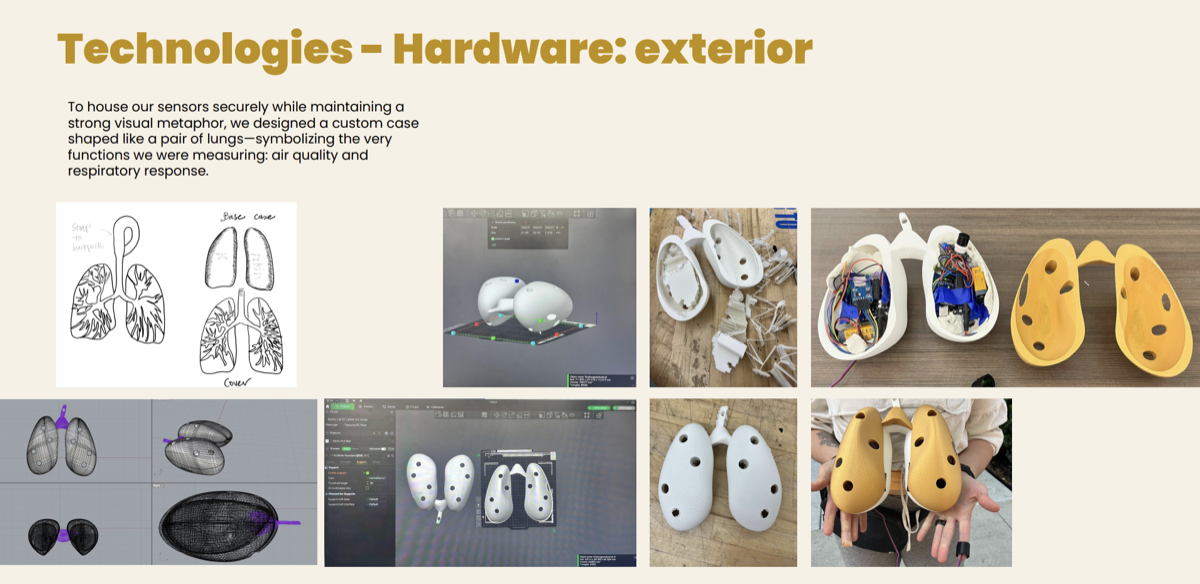
This wasn't an off-the-shelf project. I designed a wearable sensing device from scratch — a silicone wristband housing an ozone sensor, heart rate monitor, GPS module, and ESP32 microcontroller. The housing was 3D modeled in Rhino as a pair of lungs and printed to hold all components in a compact, wearable form factor.

The goal: simultaneously measure what the city's air does to your body, in real time, as you move through it.

Rhino 3D 3D Printing ESP32 Ozone Sensor Heart Rate Monitor GPS
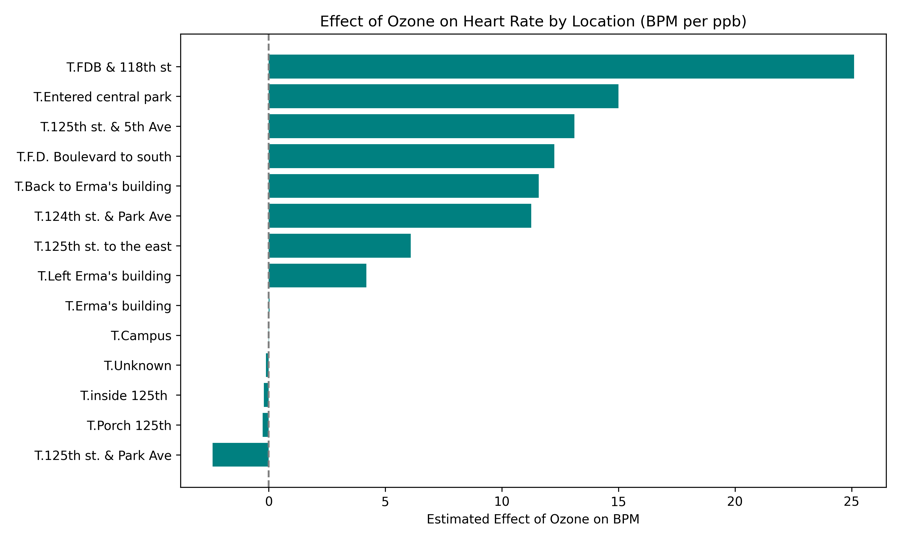
Ozone and heart rate data plotted by location
Data Collection · Spring 2025

"Sensing Lungs": Into the Field

Wearing the sensor across different urban environments — indoors, on campus, on the street, underground — I collected paired biometric and environmental data. The GPS tracked location while the ozone sensor and heart rate monitor recorded simultaneous readings, creating a dataset that links where you are to what the air is doing to your body.

Wearable Sensors GPS Tracking Field Data Collection
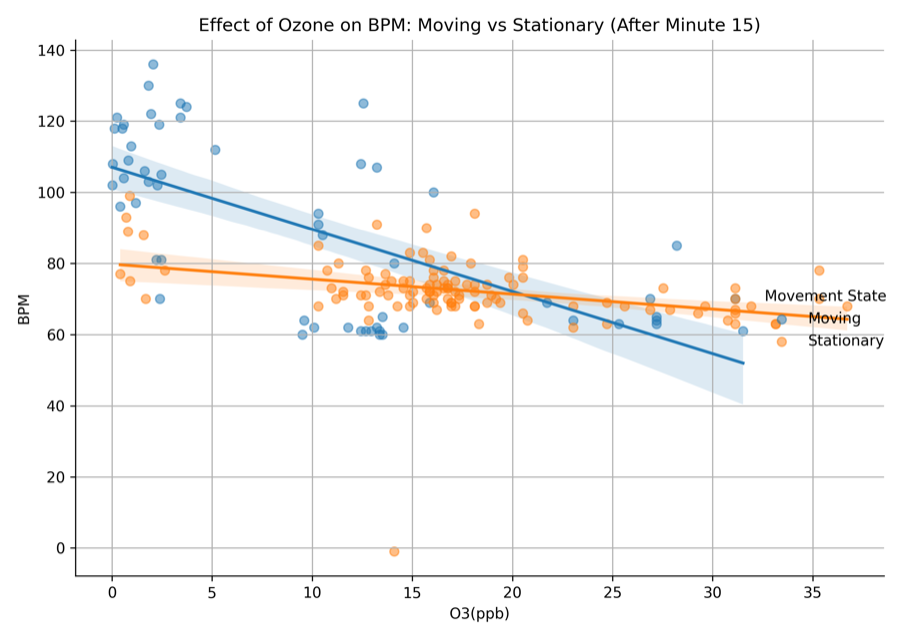
Movement-factored ozone and cardiac response after 15 minutes exposure
Analysis · Spring 2025

From Body to Data to Evidence

OLS regression and polynomial models quantified the relationship between ozone exposure and cardiac response, controlling for movement and location. The results showed statistically significant heart rate elevation during high-ozone outdoor exposure — particularly after sustained 15-minute periods.

Location-specific analysis confirmed that ozone-cardiac correlations were strongest at street level and weakest indoors, validating the sensing methodology against known exposure gradients.

Python OLS Regression Polynomial Models PCA
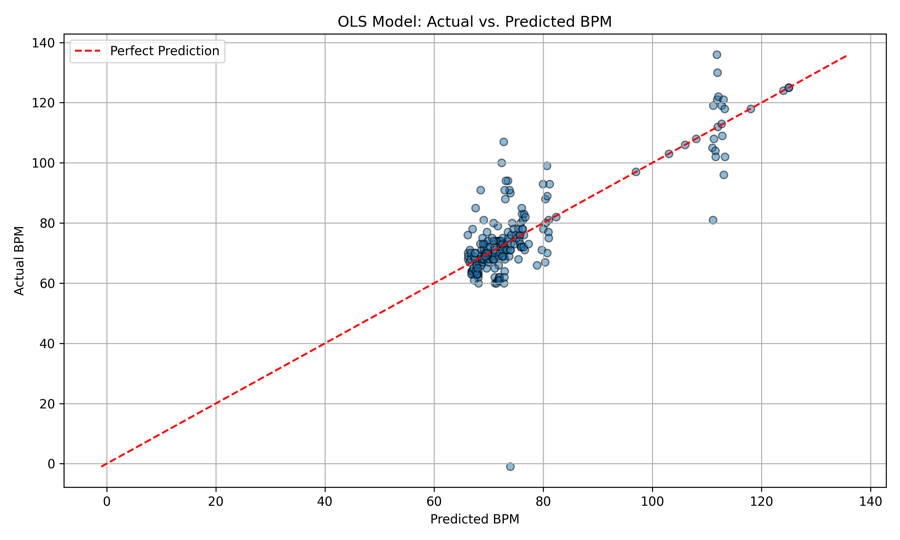
OLS actual vs predicted heart rate

Model Accuracy

OLS regression predicting heart rate from ozone exposure. The model captures the upward trend — higher ozone correlates with elevated cardiac response, especially after 15+ minutes of exposure.

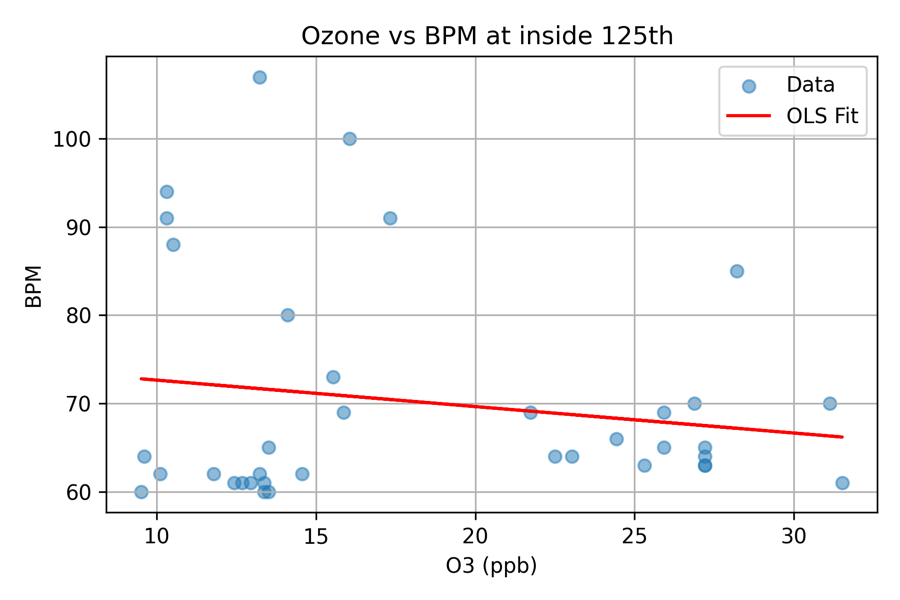
Location-dependent analysis

Location Matters

Ozone-cardiac correlations are strongest at street level and weakest indoors — validating the sensor against known exposure gradients and confirming that location context is critical.

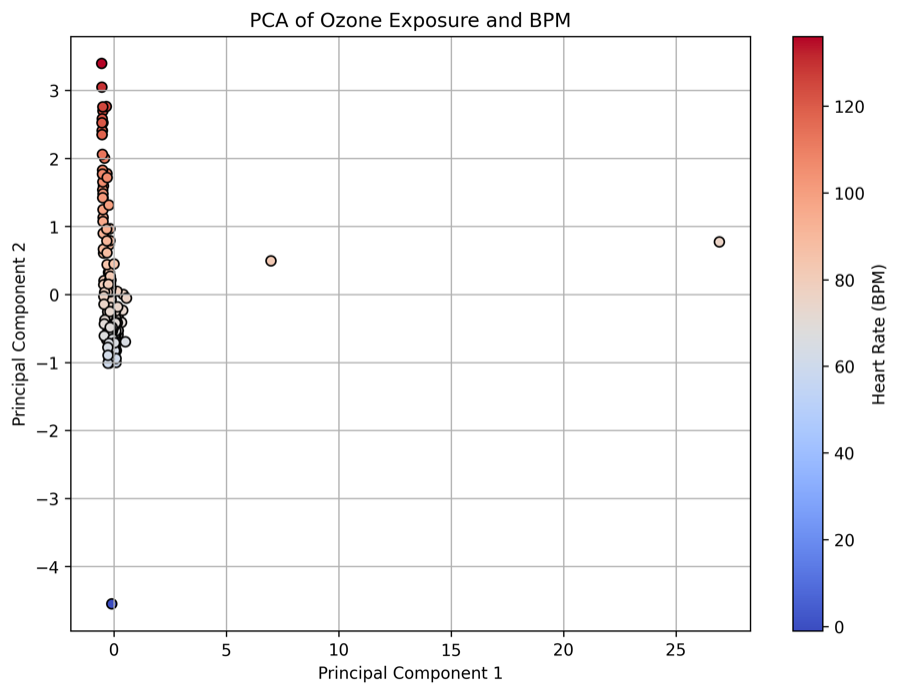
PCA of sensing data

PCA Decomposition

Principal component analysis separates movement-driven heart rate variation from ozone-driven variation, isolating the environmental signal from physical activity noise.