The strongest arguments are built on evidence, structured by analysis,
and sharpened by design. My research bridges data science and policy —
turning spatial analysis and predictive modeling into actionable
recommendations for a more circular, equitable built environment.
Thesis · 2025–2026
Circular Economy, Embodied Carbon & Construction in NYC
A year-long research project investigating how circular economy
principles could reduce embodied carbon in New York City's
construction sector — combining quantitative modeling, policy
analysis, stakeholder interviews, and design communication.
57MtCO₂e saved over 20 years (hybrid scenario)
5years to market viability
4×baseline emissions trajectory averted
The Problem
Construction is responsible for a massive share of global carbon
emissions — not just from building operations, but from the embodied
carbon locked into materials themselves. Concrete, steel, and glass
carry enormous carbon footprints before a building ever opens its doors.
Yet most climate policy focuses on operational energy, leaving embodied
carbon largely unaddressed.
NYC, with its relentless pace of construction, is both a major contributor
to this problem and a potential laboratory for solutions. What if the city
adopted circular economy principles — reusing materials, substituting
lower-carbon alternatives, diverting construction waste from landfills?
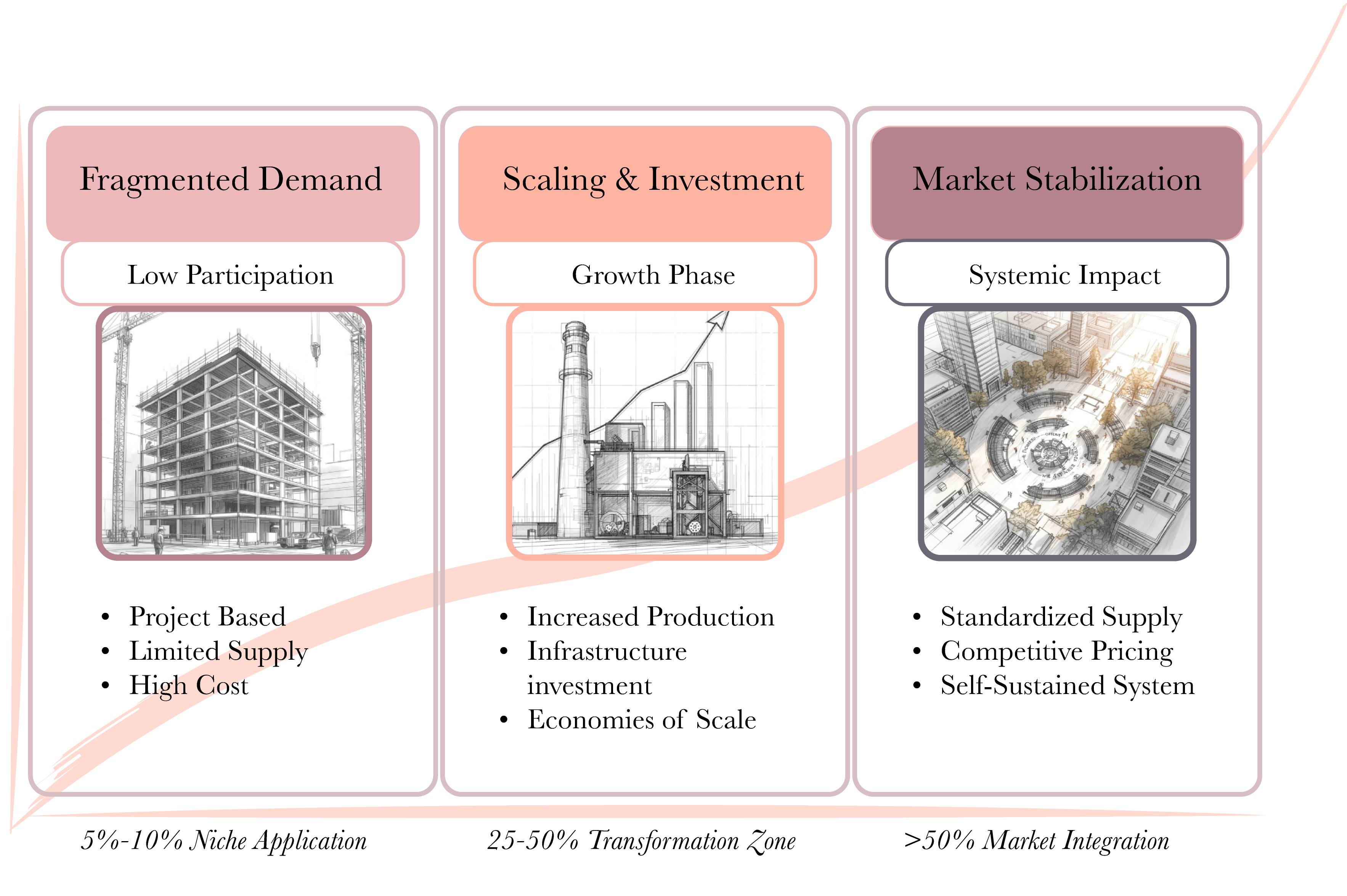
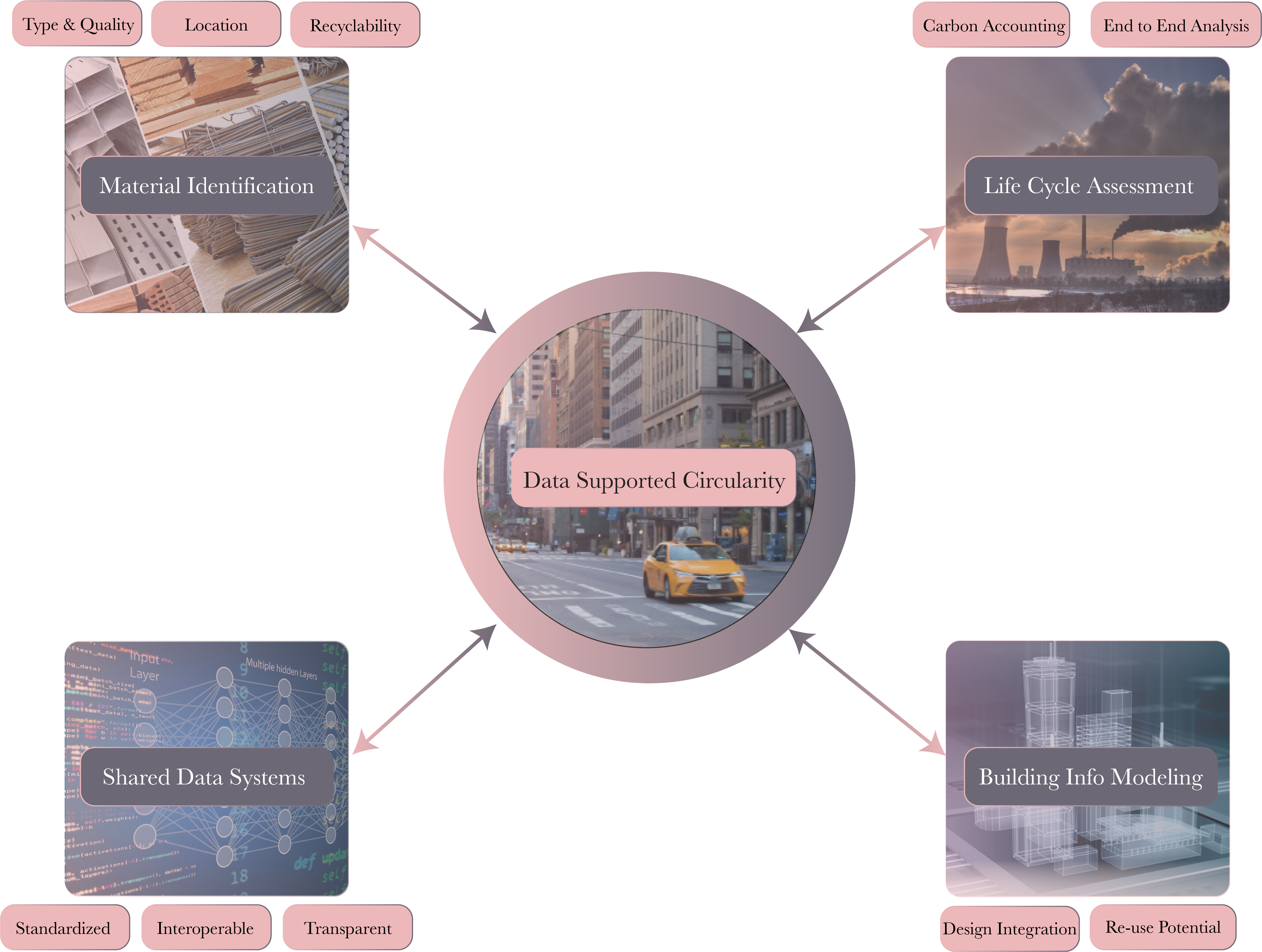
From fragmented demand to market stabilization — the path circular construction must travel.Data-supported circularity links material identification, lifecycle analysis, shared systems, and BIM.
Methodology
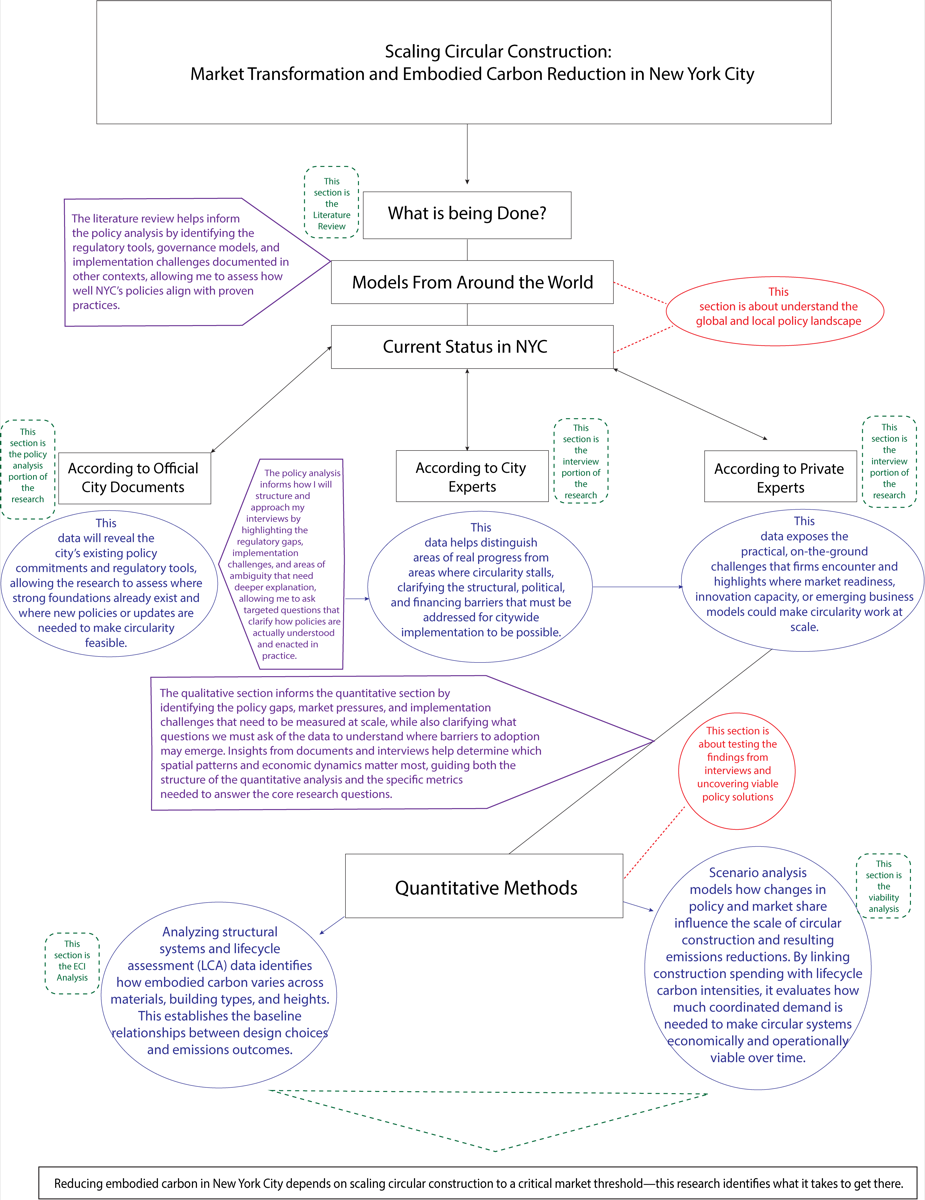
The research combined three analytical streams: quantitative modeling
of embodied carbon across building types using OLS regression and Random
Forest; scenario analysis projecting cumulative carbon savings
under four policy pathways over 20 years; and qualitative interviews
with construction industry practitioners and policymakers to ground the
models in real-world feasibility.
The data pipeline processed building-level records from NYC DOB permits,
material specifications from EPDs (Environmental Product Declarations),
and spatial data from city planning datasets — all cleaned, joined, and
analyzed in Python using pandas, GeoPandas, scikit-learn, and statsmodels.
Key Findings
What Drives Embodied Carbon?
The modeling revealed significant variation in embodied carbon intensity
across building types, structural systems, and material choices.
Click any chart to expand and read the findings.
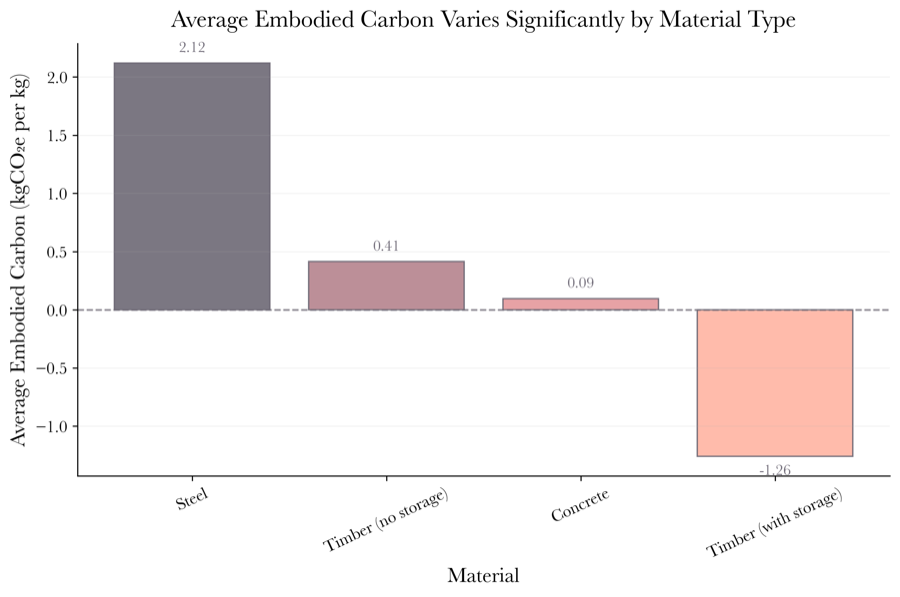
Materials Comparison
Embodied carbon varies dramatically by material. Steel and concrete dominate emissions, but the specific mix matters — low-carbon concrete substitutes can reduce material-level emissions by 30-40% without compromising structural performance.
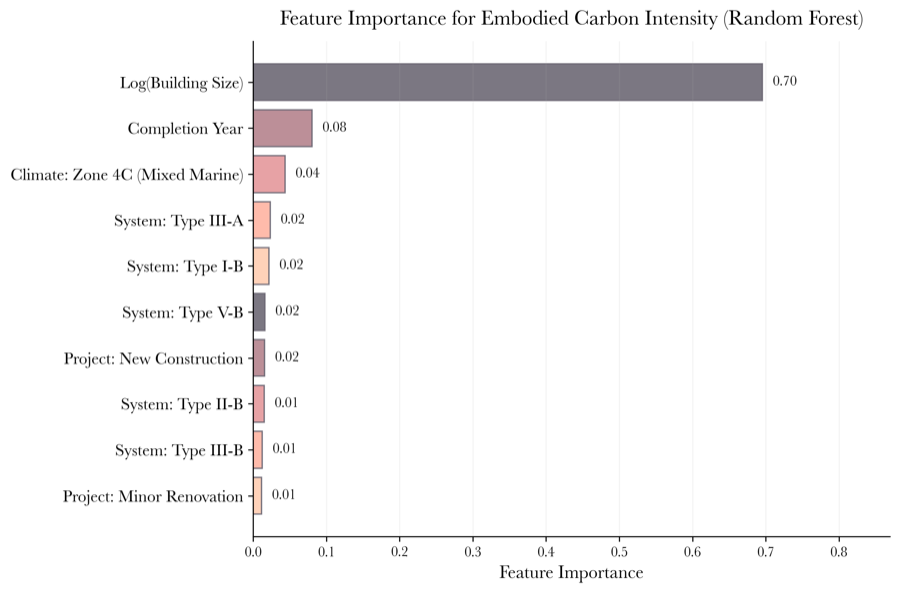
Feature Importance
Random Forest analysis reveals which building characteristics most influence embodied carbon intensity. Floor area and structural system dominate, suggesting that design-phase decisions have the greatest impact on lifecycle emissions.
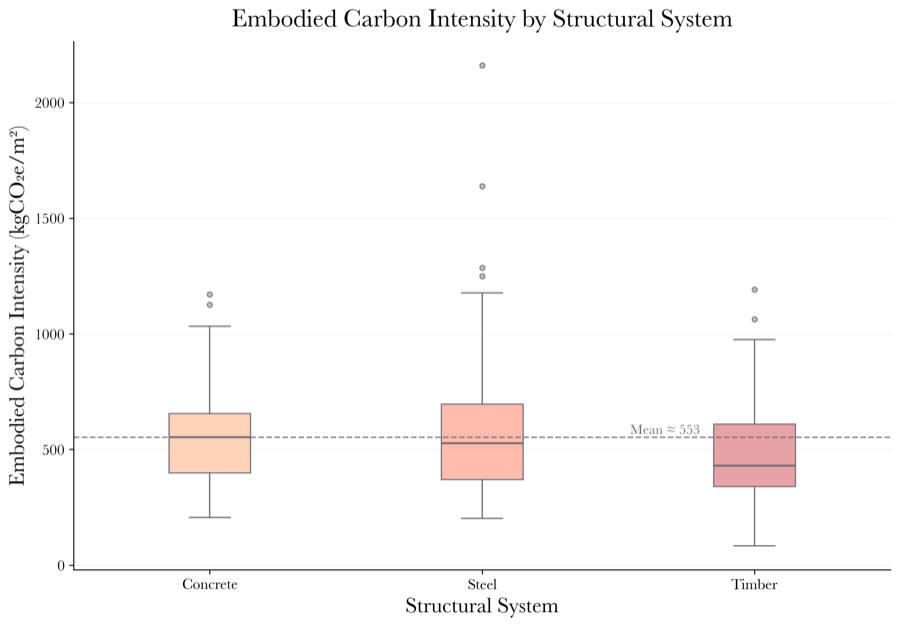
Structural System Impact
Structural system choice is one of the strongest predictors of total embodied carbon. Steel-frame buildings consistently show higher ECI than concrete or hybrid systems, moderated by building height and floor area.
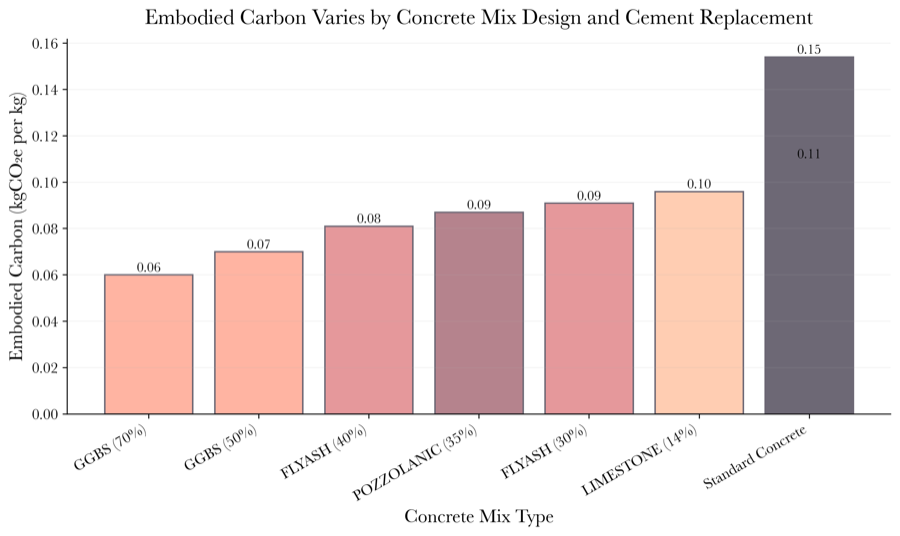
Concrete Mix Design
Small changes in cement content produce outsized carbon reductions. Blends using fly ash, slag, and supplementary cementitious materials represent the single highest-leverage intervention identified in the analysis.
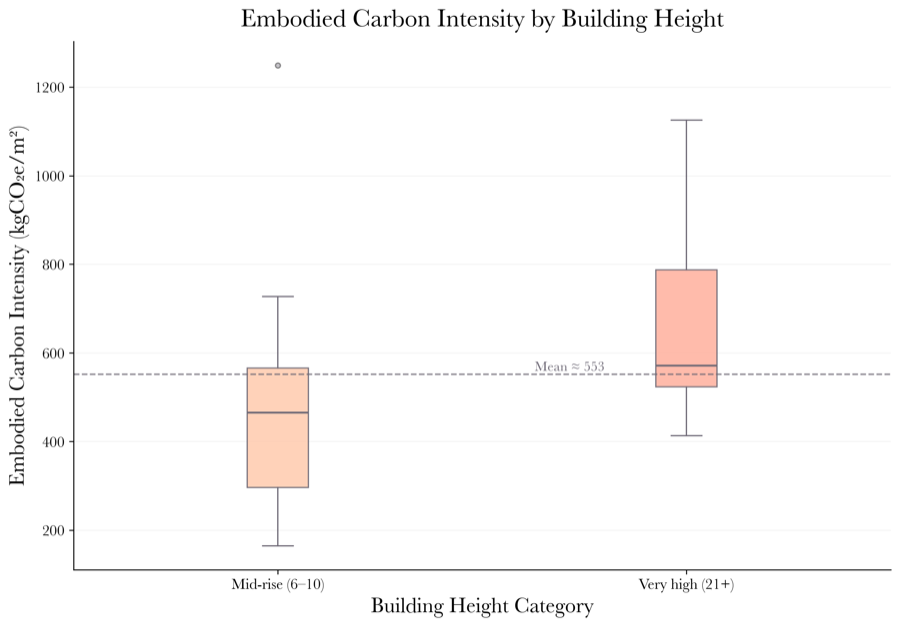
Height vs. Carbon
Embodied carbon intensity increases non-linearly with building height. Taller buildings require more structural material per square foot, but the relationship plateaus above ~30 stories.
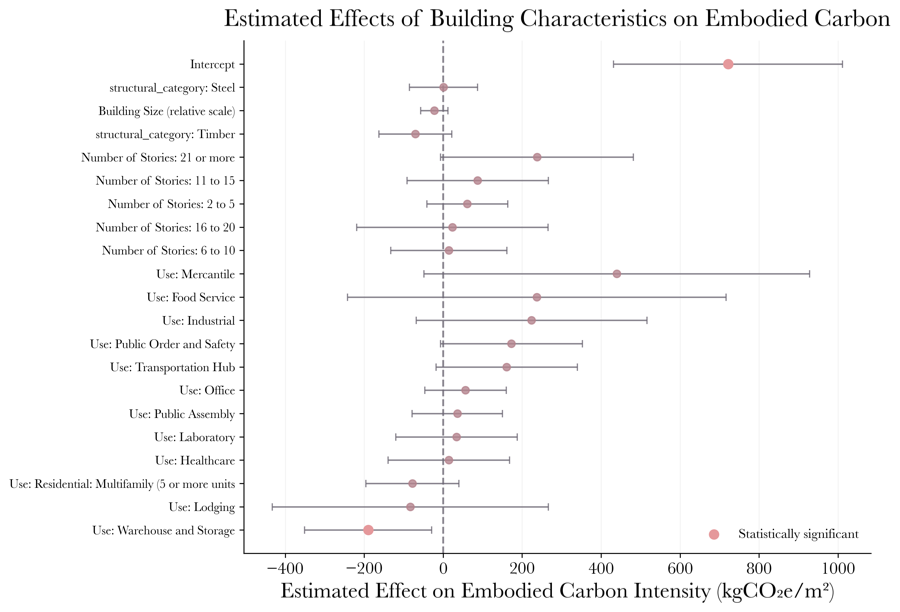
Regression Coefficients
OLS regression coefficients quantify the marginal effect of each building characteristic on embodied carbon. The model identifies which variables have statistically significant relationships with carbon intensity, controlling for all other factors.
Policy Recommendations
What Should NYC Do?
The analysis modeled four policy scenarios — from procurement reform
to subsidy programs to hybrid regulation — projecting their impact
on market transformation and cumulative carbon savings over 20 years.
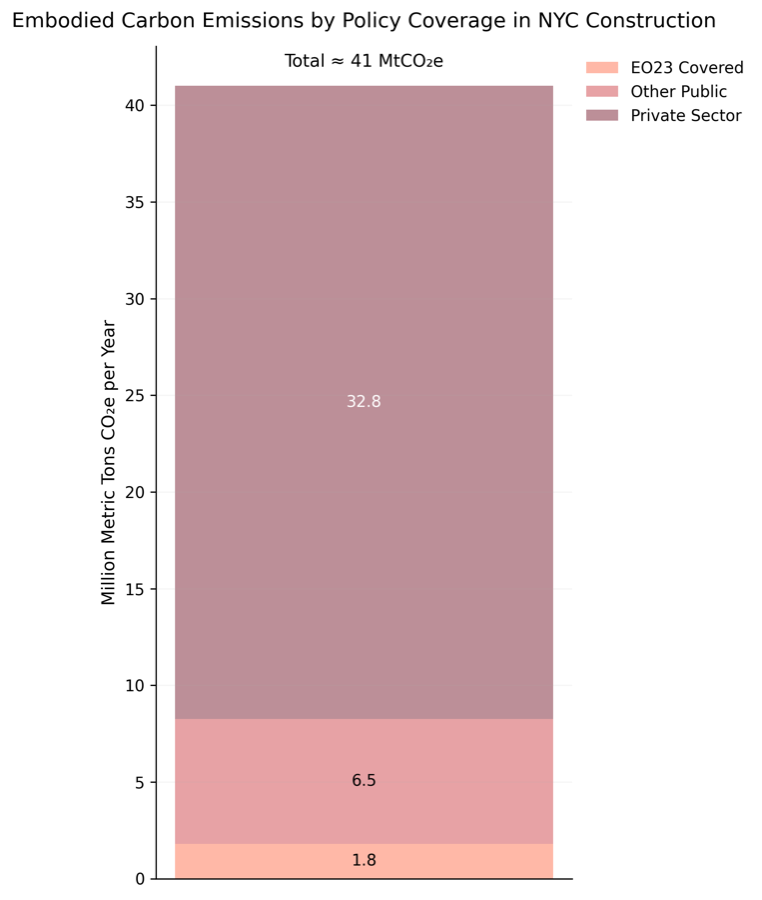
The Policy Gap
Current policy (EO23) covers only a fraction of NYC's construction
emissions. The vast majority — 32.8 million metric tons from private
sector construction — falls outside existing regulation. Closing this
gap requires extending embodied carbon requirements beyond public projects.
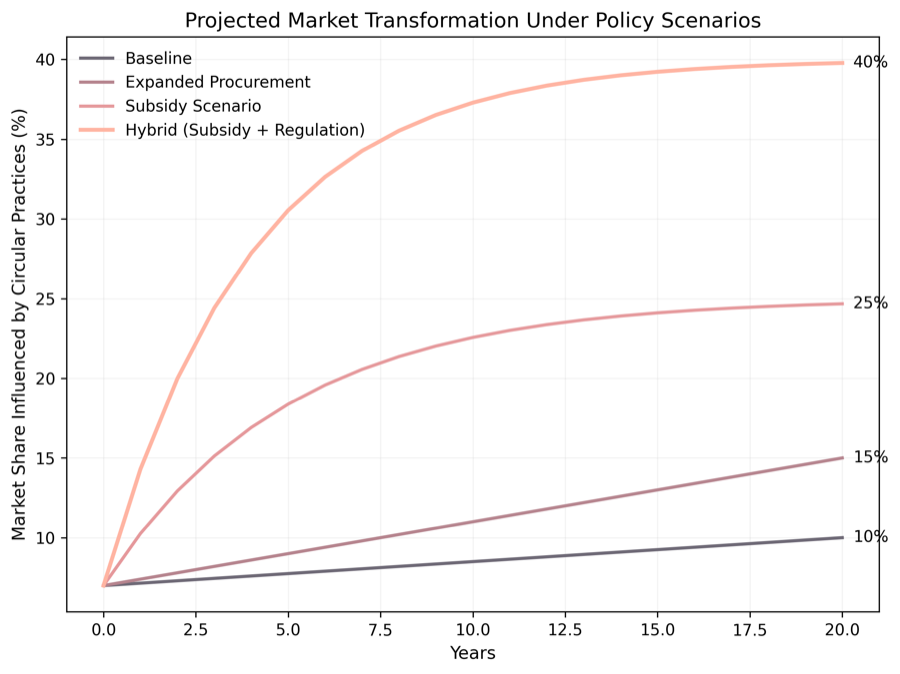
Market Transformation Scenarios
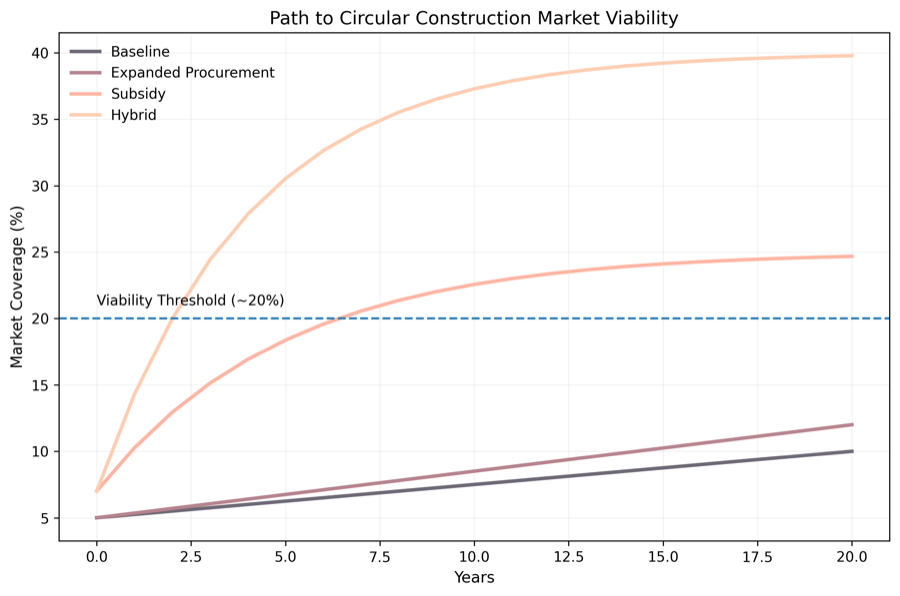
The hybrid approach — combining subsidies with regulation — achieves
40% market adoption of circular practices within 20 years, compared to
just 10% under baseline conditions. Subsidies alone reach 25%, while
procurement reform reaches 15%.
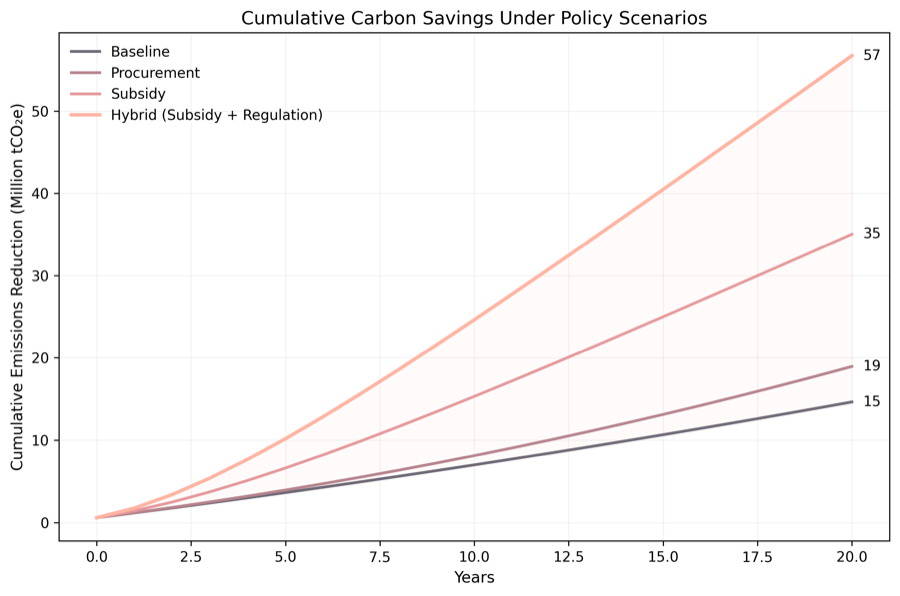
Cumulative Carbon Savings
The hybrid scenario could save 57 million tCO₂e over 20 years —
nearly 4x the baseline trajectory. Even the more modest procurement-only
approach yields 19 million tCO₂e in savings, demonstrating that
any policy action significantly outperforms inaction.
Path to Market Viability
The ~20% viability threshold — where circular practices become
self-sustaining — is reached within 5 years under the hybrid scenario
but never under baseline conditions. This suggests that early policy
intervention can create lasting market transformation, while delay
locks in decades of avoidable emissions.
What This Means
Circular economy principles are not just aspirational — they are
quantifiable, modelable, and policy-ready. By connecting material science,
spatial analysis, and policy design, this research offers a framework
for cities to address embodied carbon with the same rigor they apply
to operational energy.
 Thesis · 2025–2026